- Advanced driver assistance systems are among the biggest selling points for vehicles today.
- Some safety features we likely take for granted, like seat belts and anti-lock braking systems.
- Here is a look at the most common high-tech safety features on the market and how they work.
Over the last few decades, the technology available in our cars has advanced by leaps and bounds. While Bluetooth phone call capabilities; and the seamless integration with mobile devices to allow for music streaming, and navigation are each very cool features in any vehicle, I think most would agree: some of the most important advancements are related to driver and passenger safety. Safety features are nearly as old as driving itself, with the most basic ones entering the scene shortly after driving became widespread.
For instance, the four-wheel hydraulic brake system introduced by Duesenberg in 1922 replaced mechanical brakes and can be considered one of the first major car safety innovations.
The Dawn of ADAS Technology
Let’s fast forward almost 100 years – today’s cars are equipped with a slew of safety features. While some of us have vivid memories of a time before seatbelts and airbags were required in new vehicles, those features are old news compared to what’s being rolled out in today’s models. The newest safety introductions rely heavily on advanced electronics, computerized controls, radar, and cameras. We’ve seen such an uptick in the presence of advanced driver assistance systems (ADAS) in the past decade that AAA recently recommended standardized names for these systems, as manufacturers currently use different terms for features which perform the same functions.
So, how did we get here? To understand how some of these advanced safety features became standard, let’s explore the history of some of the most popular.
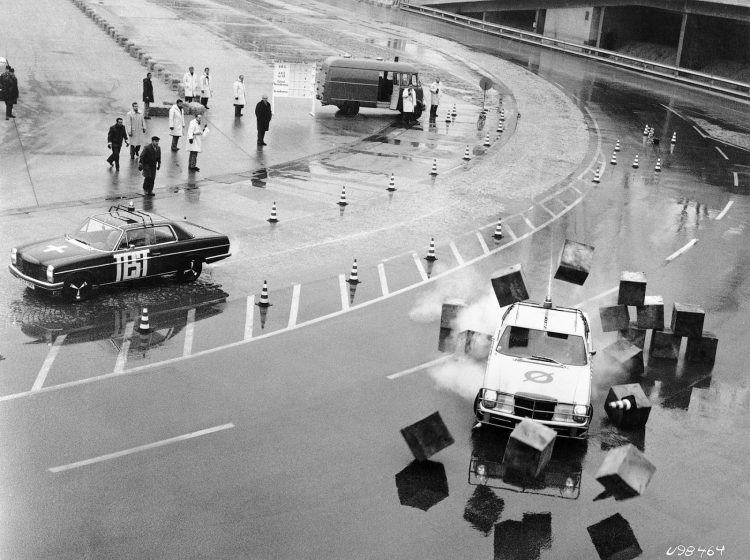
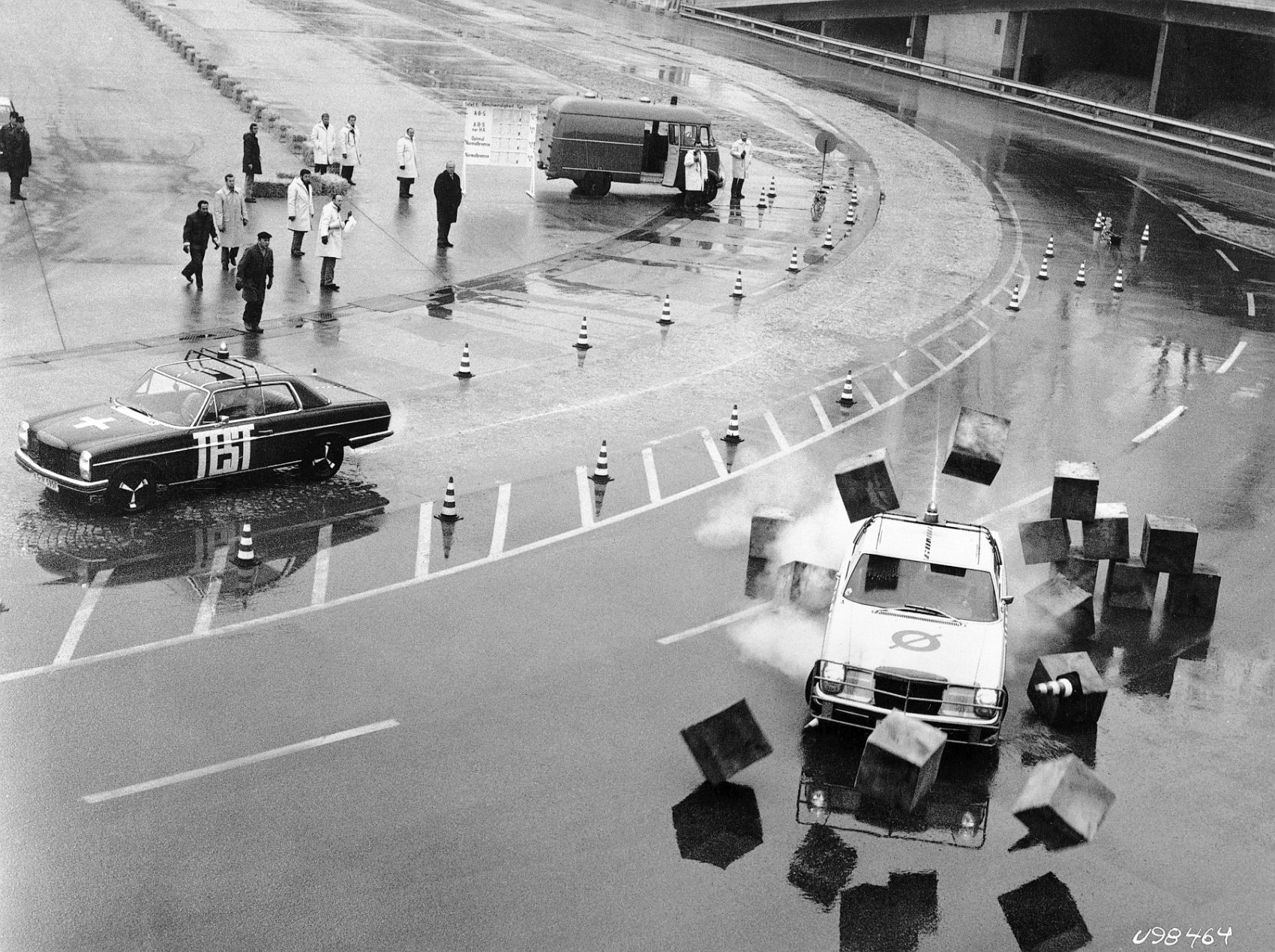
In 1970, the first-generation anti-lock braking system was developed by Mercedes-Benz and TELDIX. In August of 1978, Mercedes-Benz presented a next-generation ABS system, developed with Bosch, to the press in Untertürkheim. On the circuit, the test car with ABS remains on course through the corners when the brakes are applied. Test cars without ABS were prone to sliding off course, especially if braking was too sudden. Photo: Daimler AG.
Forward Collision Warning & Automatic Emergency Braking
According to our friends at AAA, this is the most prevalent of the ADAS technologies currently offered, coming standard in about 30 percent of 2018 model-year vehicles. This is not hard to believe, as these features star in many modern car commercials: saving the distracted teen driver from a fender-bender or taking over when a truck unexpectedly pulls out in front of the mom driving her kids to soccer practice.
These safety features rely on the use of radar to either alert a driver of an impending collision or take action to autonomously brake the vehicle. Cadillac attempted a very primitive version of a collision warning system in the late 1950s, but it was ultimately scrapped due to high manufacturing costs. We didn’t see these systems again until 1995, when a group of engineers in California introduced radar-based technology that was showcased at the North American International Auto Show the following year.
However, it still took almost 20 years for this technology to become mainstream but some early-adopters of automatic braking systems were Honda (on the Japanese-market Inspire) in 2003 with its CMBS (Collision Mitigation Brake System), and Mercedes-Benz also in 2003, with the “Pre-Safe” brake assist sensors on their S-Class model.
While we hope to never need it, this feature isn’t going anywhere. In 2016, the National Highway Traffic Safety Administration (NHTSA) and the Insurance Institute for Highway Safety (IIHS) announced that 99 percent of all new U.S. automobiles will include emergency braking as a standard feature by 2022.
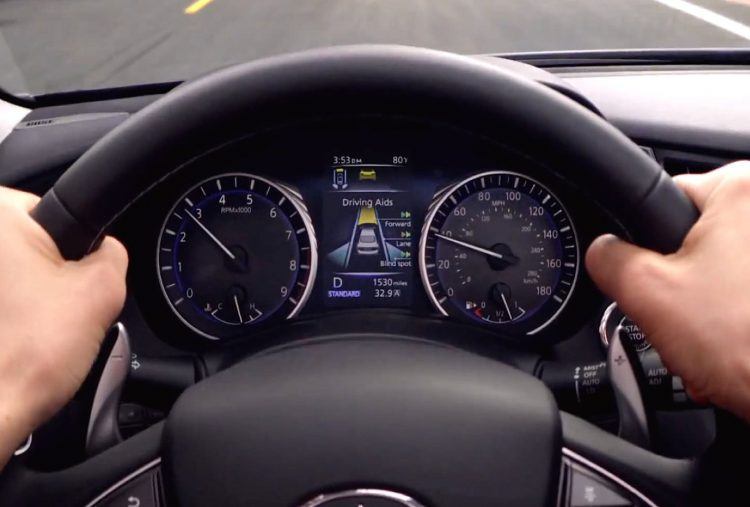
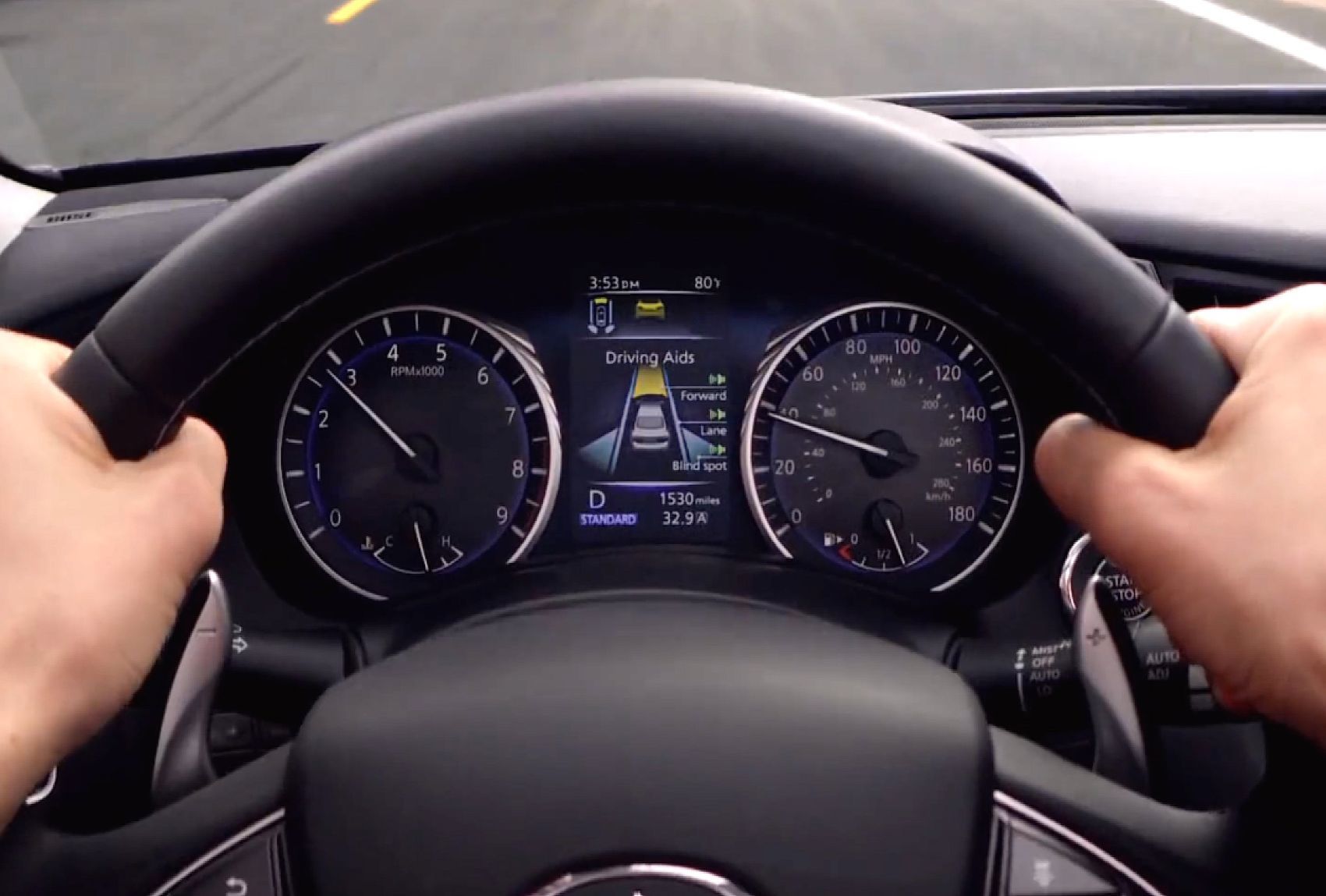
Infiniti’s Predictive Forward Collision Warning monitors the vehicle directly ahead and the one beyond it; meaning the system can effectively see two vehicles ahead. Audible and visual cues are given if any sudden or unexpected movements by the other cars are detected. Photo: Infiniti Motor Company Ltd.
Related: Despite an onset of autonomous technology, people still love to drive.
Blind Spot Warnings
Mirrors could be considered the original blind spot monitors, having been around for more than 100 years. Originally, the first rearview mirrors in cars were inside, which provided a rather clear view out the back, but did little or nothing to help see along the sides or within adjacent lanes. Outside rearview mirrors (sometimes simply called “side mirrors”) became more in-demand as the U.S. highway system expanded in the 1950s and ‘60s. But side-view mirrors still allowed for a dangerous “blind spot,” a particular problem when changing lanes on an interstate.
This eventually led to the creation of blind spot monitoring and warning systems. More technical solutions have become common in recent years and are available in a variety of functionalities. While not an excuse to stop observing your surroundings before changing lanes, these systems rely on sonar or cameras to provide an alert when an object or another car enters a blind spot. This can be done with a warning light, noise or vibration, depending on the vehicle. Some more advanced systems even include “cross traffic alerts” which provide warnings when a vehicle or person approaches from beyond a driver’s line of sight; for example, while he or she is backing up.
Blind spot monitoring first appeared in the Volvo S80 in 2005 and a variation of it is included on many vehicles today, with some being more advanced than others. For instance, Infiniti introduced a “blind spot intervention” system which actually applies the brakes to guide your car away from switching lanes if someone is in your blind spot.
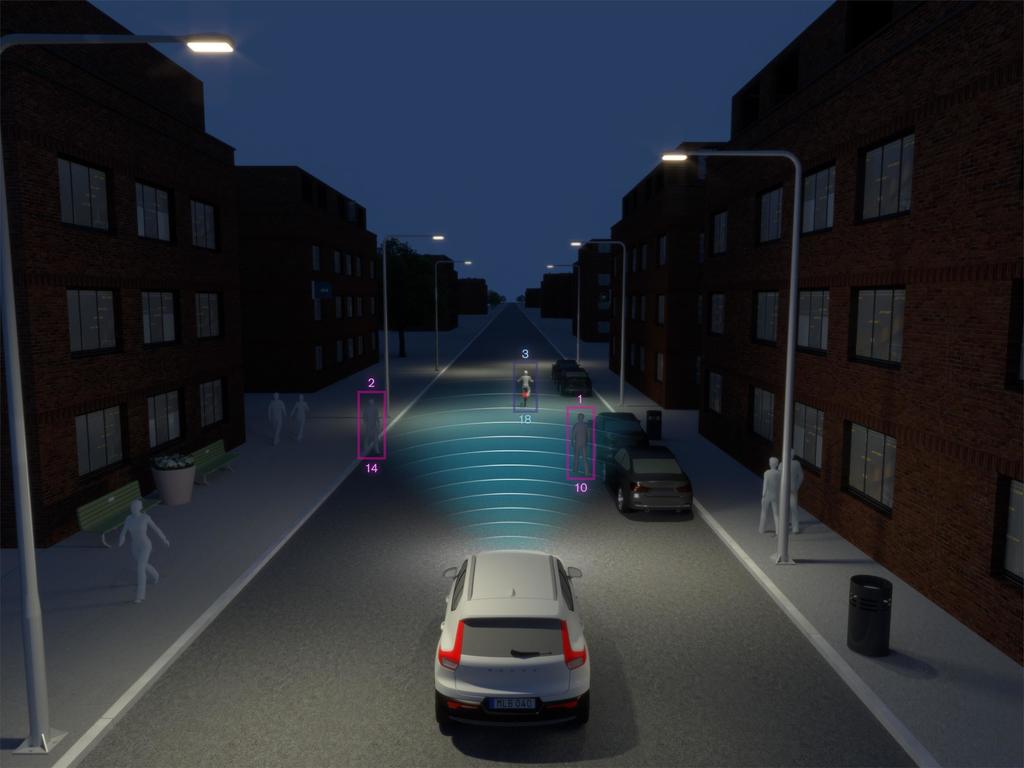
Volvo’s City Safety technology detects other vehicles, pedestrians, cyclists, and large animals like moose and deer, and can engage auto-braking to mitigate oncoming collisions. City Safety will also avoid or mitigate collisions with oncoming vehicles at intersections. Photo: Volvo Car USA, LLC.
Related: Artificial intelligence and auto safety: separating reality from fantasy.
Adaptive Cruise Control
This one can be viewed as a companion feature to the forward collision warning system, and modern cars are likely to be found with both offerings. Using the same radar or laser sensor technology in the front of the vehicle, ACC goes a step beyond traditional cruise control by controlling the throttle and brakes to maintain a set distance between your car and the one in front of it.
Some early versions of adaptive cruise control were introduced in Japan during the 1990s by Mitsubishi and relied on laser technology to assess distance and manage the vehicle’s speed through gas pedal application and transmission downshifts, rather than applying the brakes. Radar-assisted systems took off in 1999, when Mercedes-Benz introduced the feature on the S-Class and CL-Class. The technology matured from there and began to integrate with collision avoidance systems as well. If you’re a fan of cruise control (and I am!), you can appreciate how ACC lets you drive on the highway and simply not touch the brake or the accelerator as traffic ebbs and flows.
Of course, you still need to remain alert, but it can add to the driver’s overall comfort.
These safety features, while not fully autonomous, are a key component of intelligent cars. In fact, a vehicle with ACC can be considered “Level 1 Autonomous,” as it provides help to the driver but isn’t capable of driving itself or assessing other road factors such as traffic lights. Today, most manufacturers have offerings in their lineup that include some variation of ACC. Some, like BMW, are even capable of coming to a full stop and then continuing motion, if you are in stop-and-go traffic, for instance.
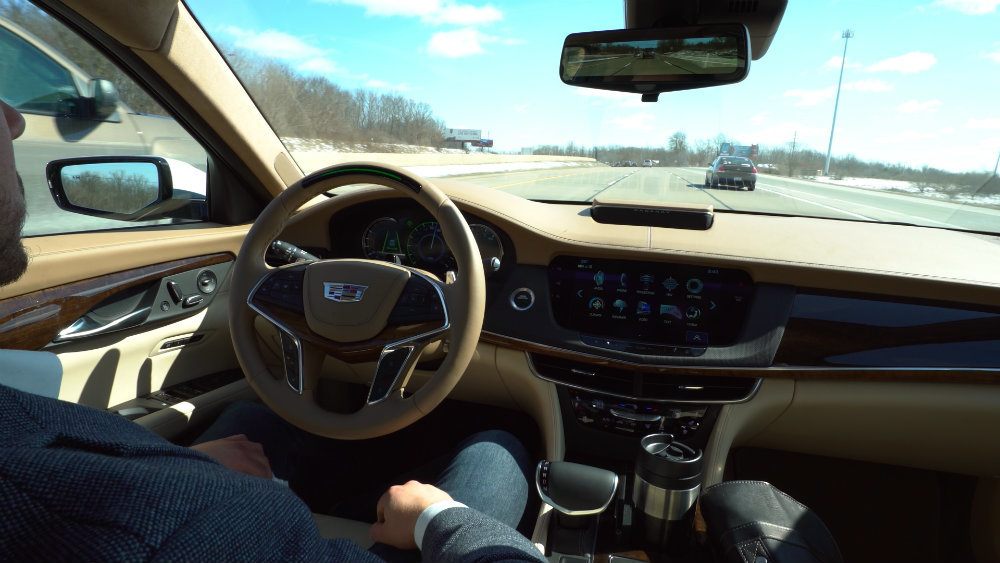
Cadillac’s Super Cruise feature, seen here in the CT6, utilizes a driver attention system and LiDAR map data. These systems are added to the network of cameras and radar sensors already in the CT6. Super Cruise can automatically steer, brake, and keep the vehicle positioned on the highway in certain, optimal conditions. Photo: Cadillac.
Related: Enter the land of confusion: are we really ready for autonomous cars?
Backup & Surround View Cameras
Most drivers are familiar with backup cameras by now. They are a standard offering on many different vehicles, and are also a popular aftermarket add-on. They are made possible by the presence of a small video camera on the rear of the vehicle which is wired to transmit live footage of what’s behind the car when in reverse. The footage is either projected on an existing dashboard screen or in the rear-view mirror, giving the driver a more complete view of any possible obstructions behind their vehicle. Most are also paired with a radar proximity sensor that will issue a warning sound when the vehicle gets too close to anything.
The first time backup cameras were introduced in production vehicles was in 1991, on the Toyota Soarer Limited. These offerings were only available in Japan and were discontinued in 1997. They made a comeback in 2000 when Infiniti unveiled the RearView Monitor as an available feature on the Q45 sedan at the New York Intentional Auto Show. Infiniti also pioneered an even more comprehensive camera system in 2007 with the “Around View Monitor,” a system that provided the driver with a bird’s eye view of their vehicle using four cameras.
The market domination of SUVs with their wide D-pillars and high haunches has made backing up a visual challenge. Backup collisions in any vehicle can be particularly dangerous so it’s not surprising the safety benefits of these cameras have led to widespread adoption by most manufacturers. Following an aggressive consumer safety campaign, NHTSA announced in 2014 a plan to require backup cameras in all automobiles sold in the U.S. built after May 2018.
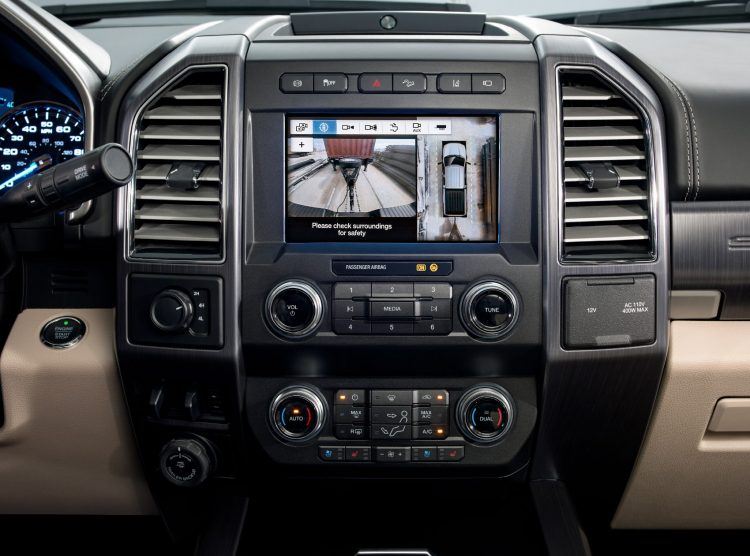
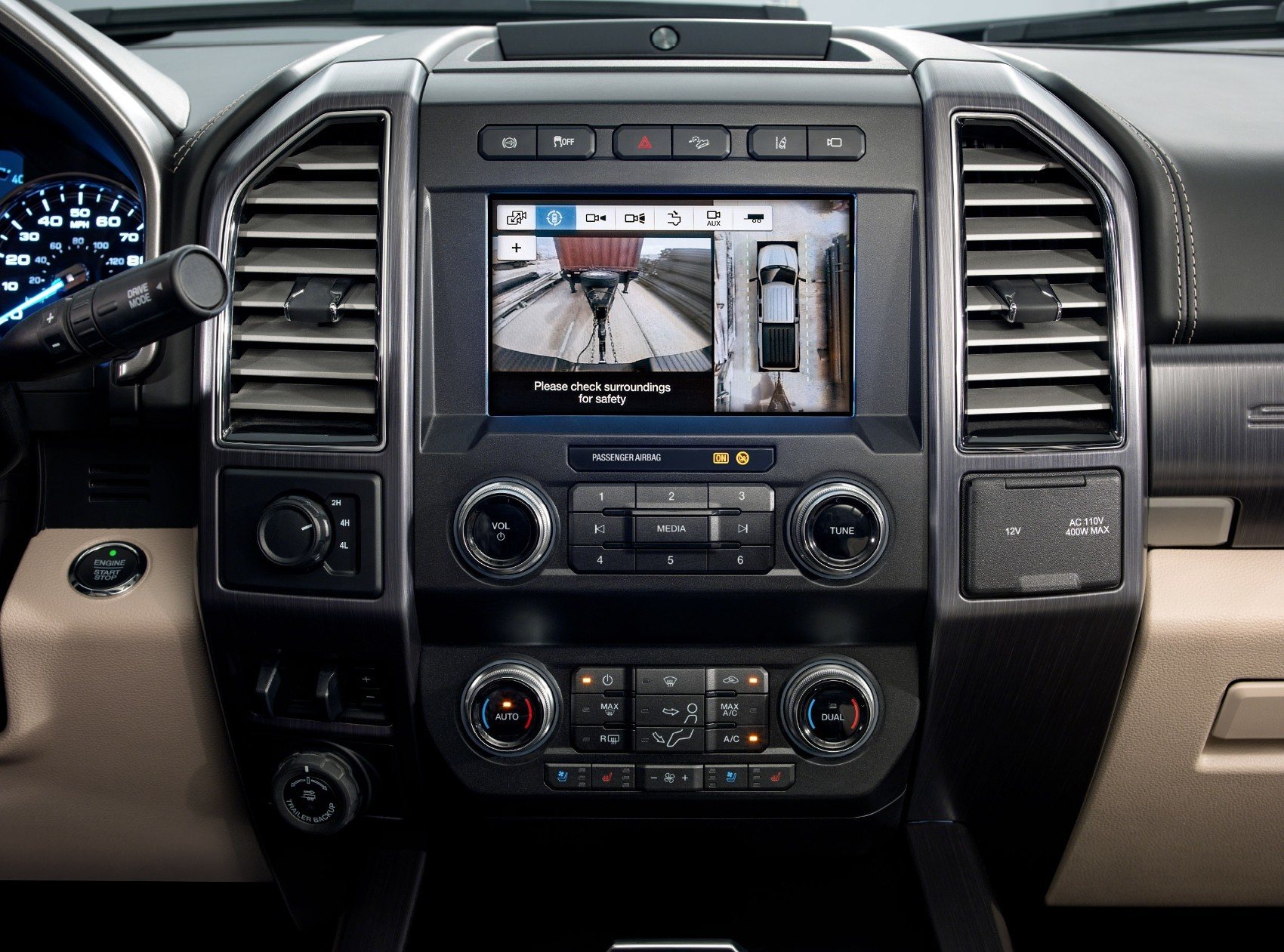
Trailer Reverse Guidance, a new feature for the 2020 Ford Super Duty, shows trailer angle and direction, and provides steering suggestions to assist the driver with backing. The system accommodates all trailer styles, including fifth-wheel and gooseneck applications. Photo: Ford Motor Company.
Related: Pet owners are concerned about safety but can automakers respond?
Lane-Departure Warning & Lane-Keep Assistance
The purpose of these systems, as the name suggests, is to keep a driver from veering unintentionally into another lane. They are designed for freeways and other high-capacity roads that have clear lane markings. Cameras installed on the front of the vehicle record the road in real time, and edge-detection software determines whether or not the car is within the lines.
Similar to the forward collision warning/prevention systems, different manufacturers offer varying levels of active or passive alerts. A departure warning system will issue a sound or vibration to alert the driver they might be drifting out of their lane; while an assistance system is capable of reacting and turning the vehicle back into the proper lane if the driver doesn’t take action. The latter is frequently paired with adaptive cruise control and can be considered a semi-autonomous feature.
Lane departure warning systems first debuted on commercial trucks in Europe in 2000. In 2001 and 2002, they began to appear on passenger cars in Japan including the Nissan Cima and Toyota Caldina. These warning systems didn’t make their way to North America until 2004, when they appeared on two Infiniti models: the FX and M. Toyota quickly followed that year, adding lane-keeping assistance to its Crown Majesta. Over the course of the next decade, these features became more mainstream. However, they haven’t been free from controversy. In 2017, the IIHS expressed concern that, by relying on these systems and other similar safety features (including forward collision warning and adaptive cruise control), drivers will become less vigilant behind the wheel.

Volvo engineer Nils Bohlin demonstrating the three-point safety belt in 1959. Since then, it’s estimated that over one million lives have been saved as a result of Volvo Cars waiving its patent rights. Photo: Volvo Car Corporation.
Future Considerations
You might say the automotive industry got its jump-start into safety with the passage of the Motor Vehicle Safety Act in 1966. At first, much of the focus was on preventing injuries in the event of an accident (seat belts, padded dashes, collapsible steering columns, air bags etc.). As these passive safety systems reached saturation, and as technology developed, car makers, government agencies, and safety advocates redirected their focus toward active safety; that is, avoiding the accident in the first place.
The most recent decade has proven how the automotive industry is undergoing a transformation when it comes to safety technology. Based on consumer demand and widespread adoption, it’s safe to say that driver assistance systems are here to stay. As today’s youngest drivers don’t remember a time before seatbelts, will the next generation express the same sentiment when it comes to forward collision warning systems?
Like most of the industry, I’ll be waiting to see.
Richard Reina is the Product Training Director for CARiD.com. He enjoys restoring and driving old cars with a special love for anything Italian. Richard is also passionate about music and is a huge Beatles fan.

content first posted on
https://www.automoblog.net/2019/04/20/brief-history-high-tech-safety-features/







 content first posted on









 content first posted on